Select Language
Polyurethane swivel casters from China Zhongshan FFIBU Casters Co., Ltd are widely valued for their smooth operation, floor protection, and high load adaptability. However, one common phenomenon that users may notice over time is yellowing—a gradual change in the wheel’s surface color from clear or light tones to yellow or amber shades. While often regarded as a cosmetic issue, yellowing can sometimes hint at deeper material changes.
Yellowing is primarily a photochemical reaction involving the polyurethane polymer chains. Common contributing factors include:
Cause | Explanation |
|---|---|
Ultraviolet (UV) Exposure | Prolonged exposure to sunlight accelerates oxidation in PU polymers, leading to chromophore formation that appears yellow. |
Oxidation | Oxygen in the air reacts with PU molecular structures, especially at elevated temperatures, causing discoloration over time. |
Heat Buildup | Continuous friction during operation generates heat, which can speed up oxidative reactions. |
Environmental Pollutants | Industrial fumes, ozone, and certain chemicals can catalyze color changes. |
Formulation Factors | Some raw materials and catalysts used in PU production are more prone to yellowing if not UV-stabilized. |
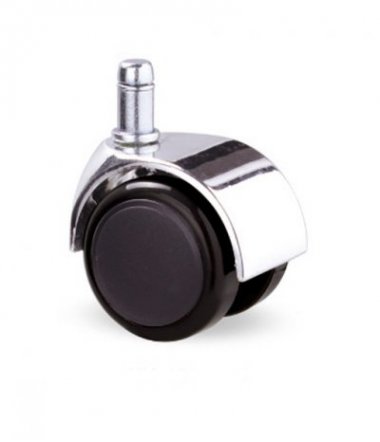
At China Zhongshan FFIBU Casters Co., Ltd, material engineers carefully select anti-UV additives and stabilizers to minimize this effect, but no PU compound is completely immune under extreme conditions.
It is important to distinguish between cosmeticand functionalconsequences:
Cosmetic Impact: In clean environments like hospitals, laboratories, or retail spaces, yellowing may affect the visual appeal of equipment.
Functional Implications: Minor discoloration usually does not affect load capacity or rolling performance. However, advanced oxidation can eventually lead to surface chalking, reduced elasticity, or micro-cracking—factors that do influence service life.
China Zhongshan FFIBU Casters Co., Ltd applies multiple approaches to mitigate yellowing risks:
Material Selection – Use of UV-resistant PU formulations with hindered amine light stabilizers (HALS) and antioxidants.
Protective Coatings – Clear topcoats can block UV rays and slow oxidation.
Environmental Control – Limiting prolonged outdoor exposure and storing casters away from direct sunlight when idle.
Operational Practices – Reducing excessive loads and speeds helps minimize heat buildup during use.
Regular Inspection – Early detection of surface degradation allows timely replacement before performance is compromised.
For applications where aesthetics matter—such as medical devices, display units, or customer-facing equipment—choosing a PU caster specifically engineered for UV resistance is critical. Where function outweighs appearance, slight yellowing can be accepted as a normal aging process without immediate concern.
Conclusion
Yellowing in polyurethane swivel casters is largely inevitable over long-term exposure to light, heat, and oxygen. The key is ensuring that the change remains cosmetic rather than structural. Through advanced formulation and preventive measures, China Zhongshan FFIBU Casters Co., Ltd delivers PU casters that retain both their professional look and reliable performance throughout their service life.
If you want, I can also prepare a technical FAQ sheet for your customers explaining why PU yellowing happens and reassuring them about product quality—this is very useful for B2B marketing. Would you like me to create that next?
 中文简体
中文简体  English
  Español
  العربية
  Français
  Русский
  Português
  Deutsch
  日本語
日本語  한국어
한국어  Tiếng Việt
  हिन्दी
  Italiano
  Nederlands
  Türkçe
  Polski
  ไทย
ไทย  Română
  বাংলা
বাংলা  Українська
  עברית
עברית  Lietuvių
  Bahasa Indonesia
  Svenska
  Magyar
  Dansk
Dansk  Suomi
Suomi  Čeština
  Ελληνικά