Select Language
When it comes to industrial mobility solutions, choosing the right caster can significantly impact efficiency, safety, and equipment lifespan. At China Zhongshan FFIBU Casters Co., Ltd, we specialize in designing and manufacturing high-performance casters for diverse applications, with our FFIBU brand recognized for durability and innovation. Two of the most common caster materials—nylon and rubber—each bring distinct advantages to the table. But which one is better for your specific needs?
Nylon casters are engineered for strength and smooth operation under heavy loads. They are exceptionally resistant to wear, chemicals, and extreme temperatures, making them ideal for factories, warehouses, and production lines.
Key benefits include:
High Load Capacity: Nylon’s structural strength supports heavier weights without deforming.
Low Rolling Resistance: This reduces the effort needed to move equipment, increasing productivity.
Floor Protection (Hard Surfaces): On smooth concrete or epoxy floors, nylon distributes weight evenly, minimizing surface damage.
However, nylon casters may produce more noise on hard surfaces and offer less shock absorption compared to softer materials.
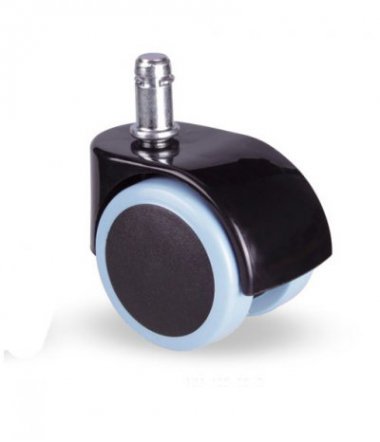
Rubber casters excel in environments where quiet movement and floor protection are priorities. Their natural elasticity absorbs shocks and vibrations, safeguarding both the load and the flooring.
Advantages include:
Noise Reduction: Ideal for hospitals, offices, and libraries where silence matters.
Enhanced Traction: Performs well on uneven or slippery surfaces.
Gentle on Floors: Protects delicate flooring such as tiles, wood, or linoleum.
The trade-off is lower load capacity and faster wear when used in high-intensity industrial settings.
The decision between nylon and rubber depends on your operational environment:
Choose nylon casters from FFIBU when handling heavy loads in industrial spaces with smooth flooring.
Opt for rubber casters when prioritizing quiet operation, shock absorption, and floor protection in lighter-duty applications.
At China Zhongshan FFIBU Casters Co., Ltd, our FFIBU product line covers both nylon and rubber options, each precision-engineered to meet the demands of modern industry. By matching caster material to application, you ensure smoother operations, reduced downtime, and longer equipment life.
If you’d like, I can also create a comparison chart for nylon vs. rubber casters that you could use alongside this article for marketing purposes. Would you like me to prepare that next?
 中文简体
中文简体  English
  Español
  العربية
  Français
  Русский
  Português
  Deutsch
  日本語
日本語  한국어
한국어  Tiếng Việt
  हिन्दी
  Italiano
  Nederlands
  Türkçe
  Polski
  ไทย
ไทย  Română
  বাংলা
বাংলা  Українська
  עברית
עברית  Lietuvių
  Bahasa Indonesia
  Svenska
  Magyar
  Dansk
Dansk  Suomi
Suomi  Čeština
  Ελληνικά